The Volhynia Massacre. The Genocide of Poles in Volhynia, Ukraine, and Eastern Galicia |
The Volhynia Massacre, often referred to in English as the Volhynian Massacres, was undoubtedly an organised campaign carried out with the intention of destroying, in whole or in part, the national group constituted by Poles in the Polish Eastern Borderlands. As such, it fulfils the definition of genocide - a genocide committed against Poles in Volhynia. This tragic chapter of history remains one of the greatest challenges in relations between Poland and Ukraine.
Volhynia, now in Ukraine, in the Second Polish Republic and under German and Soviet occupation
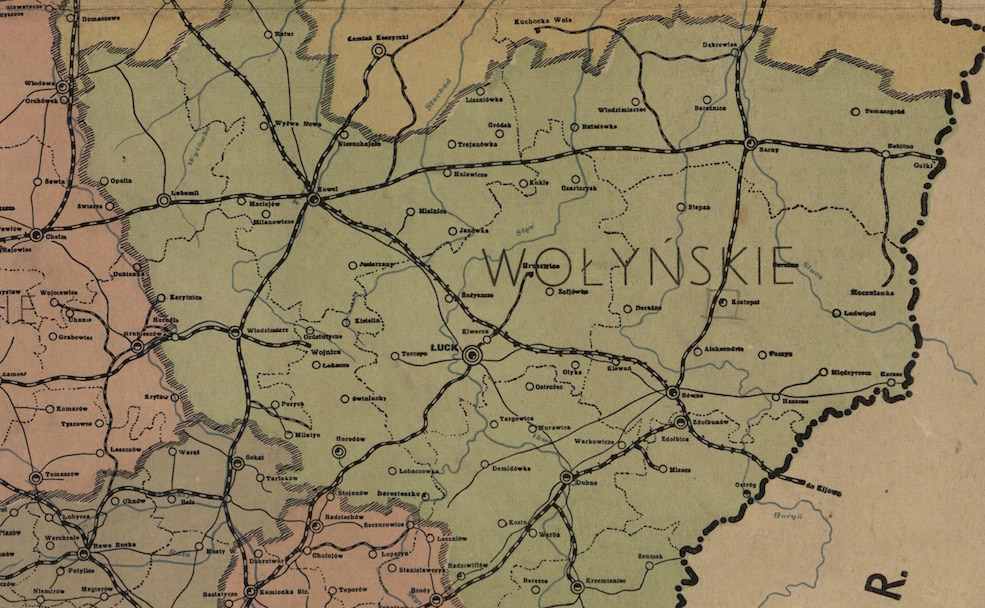
Administrative map of the Volhynian Voivodeship, 1939
After Poland regained independence, the Volhynian Voivodeship - a region of historical Volhynia, now in north-western Ukraine - became part of the Polish state. According to the 1931 census, it was inhabited by 1.45 million Ukrainians, 340,000 Poles and 200,000 Jews.
Following the provisions of the Molotov-Ribbentrop Pact and the Soviet aggression against Poland, in September 1939 the eastern territories of Poland, including the Volhynian Voivodeship, came under Soviet occupation. In their familiar manner, the Soviets organised a falsified referendum in the illegally annexed territories. This was also the case with the Polish Eastern Borderlands and Volhynia, which was incorporated into the Ukrainian Soviet Socialist Republic.
After Germany attacked the USSR in June 1941, and in view of the rapid advance of the German army, Volhynia came under German occupation. The territories of Volhynia and part of Polesia were incorporated into the Reichskommissariat Ukraine, which also included the districts of Dnipropetrovsk, Kyiv, Crimea, Mykolaiv and Zhytomyr. The administrative unit that included Volhynia was inhabited by approximately 3.25 million Ukrainians and 950,000 Poles. Ukrainians therefore outnumbered Poles in this area by more than three to one.
The attempt to establish a Ukrainian government
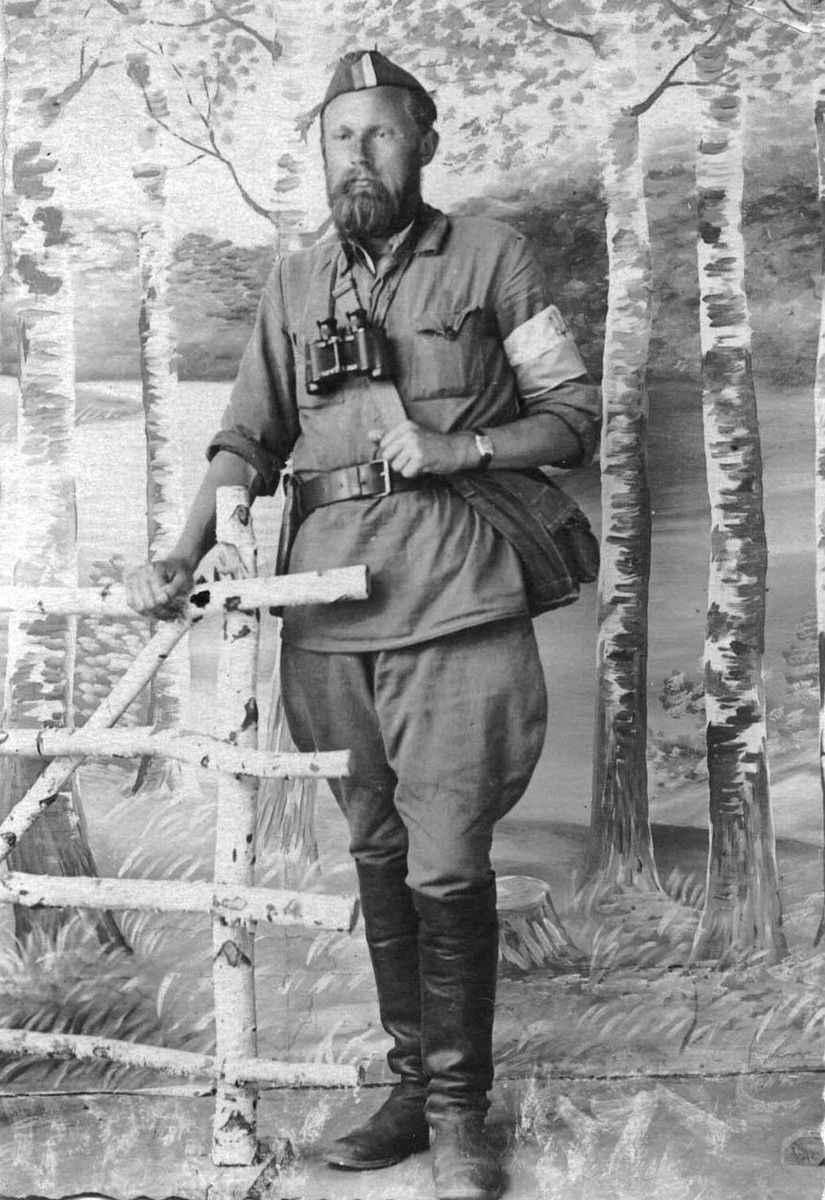
Taras Boroweć
Many Ukrainians sought to exploit the new situation created by Germany’s attack on the USSR, seeing in the Third Reich an opportunity to establish their own national state. On the one hand, they joined the Wehrmacht; on the other, they made an unsuccessful attempt to create a Ukrainian government in Lviv, headed by the Banderite Yaroslav Stetsko.
The Germans immediately banned the government’s activity and arrested the leaders of the Organization of Ukrainian Nationalists, including Stepan Bandera and Yaroslav Stetsko. From the occupied lands of the Lviv, Tarnopol and Stanisławów voivodeships, the Germans created the District of Galicia and incorporated it into the General Government.
Moreover, Ukrainians in the Reichskommissariat were treated worse than those in the General Government. They were exploited as cheap labour, subjected to heavy quotas and exposed to a policy of terror. Contrary to the hopes of Ukrainian peasants, the Germans did not abolish the Soviet collective farms, where Ukrainian peasants were still forced to work.
In the face of such repression, Ukrainian nationalists had to go deep underground. In October 1942, the Banderites concluded that preparations should be made for a nationwide uprising, which, at the appropriate moment, was to lead to the creation of an independent Ukrainian state. It was also decided that one of the means of achieving this goal would be the expulsion of Poles, and, should they resist, their extermination. The genocide of the Jews carried out by the Germans in Volhynia served as an inspiration for such actions.
UPA - the Ukrainian Insurgent Army
Volhynia became an area where the Ukrainian partisan movement began to develop particularly strongly. It was a region that had largely fallen into anarchy, as the Germans, outside the largest towns, were unable to maintain order. As a result, in order to defend themselves against ordinary banditry, among other threats, Ukrainians began organising self-defence units, which proved susceptible to nationalist propaganda.
In this way, in October 1942, the Ukrainian Insurgent Army - UPA - was created under the leadership of Taras Bulba-Borovets. This was the so-called First UPA, whose programme was not radical enough to assume the extermination of Poles. Apart from the UPA, two factions of the Organization of Ukrainian Nationalists operated in Ukraine. In 1940, the OUN had split into the Banderite faction, OUN-B, led by Stepan Bandera, and the Melnykite faction, OUN-M, led by Andriy Melnyk. Ultimately, both UPA units and OUN-M formations were forcibly subordinated by OUN-B.
Within the Banderite UPA, the idea of implementing „Ukraine for Ukrainians” began to dominate, which in practice meant the removal of Jews and Poles. In the case of the Jews, the extermination had been carried out primarily by the Germans; the Poles therefore remained. The aim was not only to physically eliminate Poles, but also to erase all traces of Polishness. This was intended to make it more difficult for Poland to lay claim to these territories.
The Volhynia Massacre. The genocide of Poles
Attacks on Poles were carried out under fabricated pretexts, such as accusations of collaboration with the Germans. The murders were not always committed by organised units. Often, Poles were killed by Ukrainian peasants who had been encouraged or forced to take part.
The first anti-Polish actions took place in the winter of 1943. The first of these is generally considered to have been the massacre of more than 150 Polish inhabitants of Parośla on 9 February, carried out by a UPA unit under the command of Hryhoriy Perehyniak. The attacks gradually spread across the whole of Volhynia.
In March, around 5,000 Ukrainian policemen deserted from German service. They had experience of the extermination of the Jewish population and therefore knew the German methods, which they could now use against Poles. In March 1943, a UPA unit commanded by Ivan Lytvynchuk murdered around 180 Poles in Lipniki.
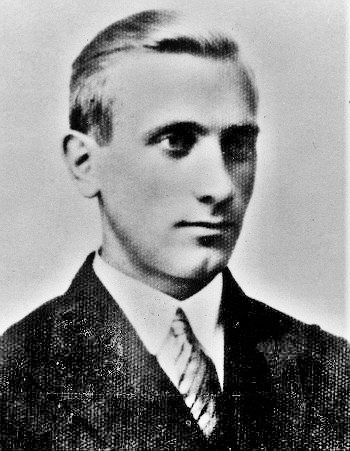
Dmytro Klaczkiwski
In June 1943, Dmytro Kliachkivsky, commander of UPA-North and regarded as one of the initiators and principal perpetrators of the Volhynia Massacre, issued a secret order to liquidate the Polish population of Volhynia. A fragment of the order reads as follows:
„(...) We should carry out a great action aimed at the liquidation of the Polish element. With the departure of the German troops, we must take advantage of this favourable moment to liquidate the entire male population between the ages of 16 and 60. (...) We cannot lose this struggle, and at any cost we must weaken Polish forces. Forest villages and settlements located near forest complexes should disappear from the face of the earth.”
In 1943 alone, more than 900 anti-Polish actions were recorded, including brutal attacks on individual Poles and their families, especially those who played important social roles. These actions were intended to force Poles to flee.
Bloody Sunday in Volhynia
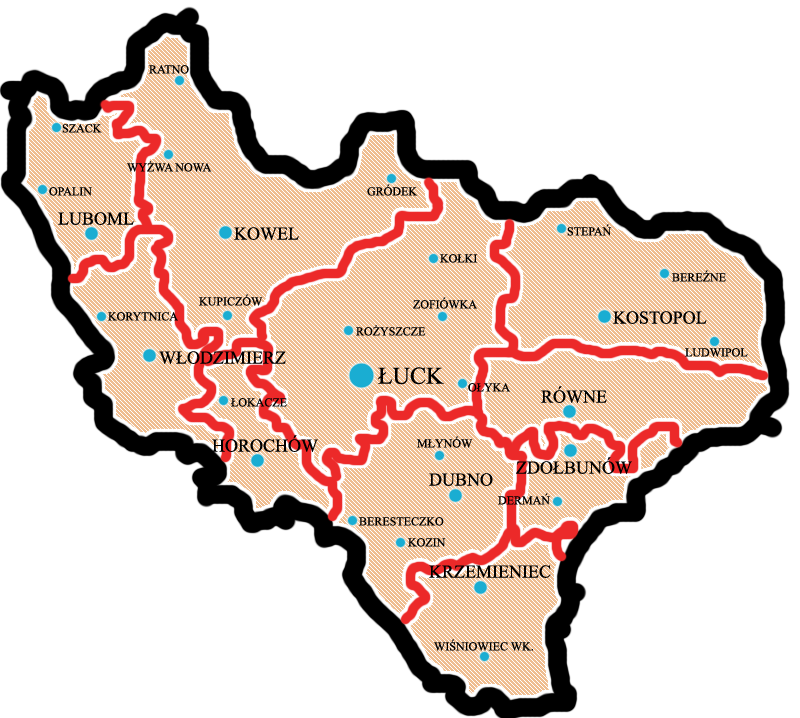
Map of the Volhynian Voivodeship before 1930
July 1943 was particularly tragic. During that month, the UPA carried out more than 300 anti-Polish actions, murdering around 10,000 Poles. The most tragic events took place on 11 July, when Poles were murdered in almost 100 settlements, including during religious services, as happened in Poryck and Kisielin. This is where the term „Bloody Sunday” comes from: the attackers wanted to gather as many Poles as possible in one place. The following day, UPA attacks affected 65 Polish localities. In July, the pogrom engulfed more than 500 localities inhabited by Poles. Another intensification of attacks took place on 29-31 August, when UPA units attacked 85 Polish localities.
By the end of 1943, Ukrainians had murdered or forced almost the entire Polish population of Volhynia to flee. Polish villages were burned, and property was looted. The same was done to religious buildings. The actions were methodical: after murdering and robbing the inhabitants of one village, UPA units moved on to the next.
The murders were often committed with particular cruelty, including with the use of farming tools such as pitchforks, axes, scythes and hammers. No one was spared - not children, not women, not the elderly. Poles were murdered indiscriminately. There were cases in which victims were tortured by having parts of their bodies cut off, their eyes gouged out, or by being burned alive. This planned campaign had one objective: the ethnic cleansing of Poles, which, under international law, constituted the crime of genocide. One of the paradoxes of history is that Poles who survived the massacres, stripped of their property and homes, sought refuge in towns where German garrisons were stationed. There, even Polish self-defence was often tolerated by the Germans.
Estimates of the number of victims of the campaign against the Polish population in Volhynia range from 40,000 to as many as 60,000. A further approximately 125,000 Poles were forced to abandon their homes and flee westwards.
The genocide of Poles in Eastern Galicia
In 1944, Ukrainians continued the massacre of Poles in Eastern Galicia, historically also referred to in Polish as Eastern Lesser Poland, as agreed by the leadership of OUN-B and the UPA at the end of 1943. First, leaflets were distributed ordering Poles, under threat of death, to leave Eastern Galicia. Then the threatened murders of Poles who remained in those territories were carried out. As a result of the nationalist UPA campaign, a further 20,000 to 70,000 Poles were killed. In addition, around 300,000 Poles were forced to flee.
Mass murders also took place in Eastern Galicia. One example is Huta Pieniacka, where on 28 February Ukrainian policemen, together with UPA units, murdered around 850 Poles.
In total, between 60,000 and 130,000 Poles were killed in the Volhynia massacres and in the massacres in Eastern Galicia.
Bibliography:
- A. Kaczmarek, „Historia Polski 1914-1989”, Warsaw 2014.
- G. Motyka, „Od rzezi wołyńskiej do akcji „Wisła”. Konflikt polsko-ukraiński 1943-1947”, Kraków 2011.
- W. Roszkowski, „Historia Polski 1914-2015”, Warsaw 2017.
- E. Siemaszko, „Lipiec 1943 roku na Wołyniu„, ”Biuletyn IPN”, 7-8/2018.
- E. Siemaszko, „Od walk do ludobójstwa„, ”Rzeczpospolita”, 10 July 2008.
- A. L. Sowa, „Stosunki polsko-ukraińskie na Wołyniu i w Galicji Wschodniej w latach 1918-1945”, in:
- „Kto tego nie widział, nigdy nie uwierzy. Zbrodnia wołyńska. Historia i pamięć. Materiały edukacyjne”, edited by R. Niedzielko, Warsaw 2013.
Lubisz czytać nasze historie?
Na historia.org.pl codziennie opowiadamy dzieje Polski i świata tak, jak na to zasługują - rzetelnie, pasjonująco, z szacunkiem do faktów. Ale żadna opowieść nie przetrwa bez tych, którzy chcą jej słuchać i ją wspierać.
Postaw nam wirtualną kawę - to darowizna, która realnie pomaga nam działać dalej. To dzięki takim gestom możemy nadal pisać o zwycięstwach, bohaterach i wydarzeniach, które zbudowały naszą tożsamość.